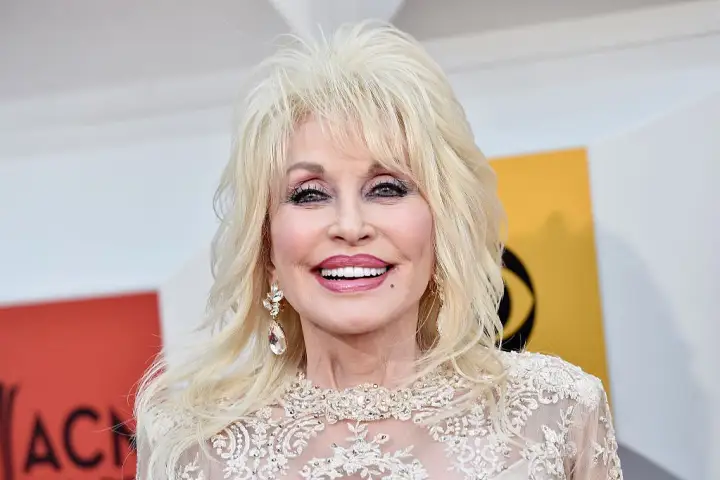
Dolly Parton, the singer, songwriter, actress, businesswoman and philanthropist who rose from an impoverished childhood in the mountains of East Tennessee to become one of the most beloved figures in American entertainment, has died at the age of 80.
Parton’s family announced her death Tuesday, and her team said she had faced a brief battle with cancer. She died surrounded by loved ones, closing a remarkable career that spanned more than six decades and transformed a girl from a one-room cabin into the internationally recognized “Queen of Country” music.
Her nephew, Brian Seaver, announced the news in a video posted on her Instagram account. Seaver, who had worked as Parton’s head of security for more than two decades, said the singer had prepared him for the responsibility of announcing her death.
He remembered her as an aunt, sister and grandmother whose family life remained important despite her worldwide fame. Seaver said Parton “lived in the light” and was now reunited with her late husband, Carl Dean, her parents and others she loved.
Parton’s team praised the generosity and warmth that became central to her public identity. In a statement, Team Dolly said she spent her life bringing joy, laughter, hope and integrity into everything she touched and used her success to help countless people, including many she never personally met.
As news of her death spread, tributes poured in from fans, entertainers and political leaders. President Donald Trump ordered U.S. flags lowered to half-staff nationwide for one week, while stars across the entertainment world shared condolences and memories of a performer whose influence reached far beyond country music.
Her death followed several years of health problems. In May, Parton canceled a planned Las Vegas show and revealed she had been undergoing treatment for kidney stones. She also said her immune and digestive systems had suffered difficulties, though she remained determined to recover and continue working.
Only days before her death, Parton acknowledged that she had slowed down after Dean died in March 2025. Yet she insisted that retirement was not part of her plans. “I’m still workin’,” she said, adding that she had dreamed herself into a corner because she still had many projects she wanted to see come to life.
During her career, Parton sold more than 100 million records and won 11 Grammy Awards, establishing herself as one of the bestselling performers in music history. Her success extended to Hollywood, where she became known for films including “9 to 5,” “Steel Magnolias” and “The Best Little Whorehouse in Texas.”
Her glamorous appearance, featuring towering blond hairstyles and elaborate makeup, became part of her unmistakable image. Parton often met questions about her appearance with humor, delivering the famous line, “It costs a lot of money to look this cheap.”
Behind the humor was a shrewd businesswoman who maintained creative control in an industry often dominated by men. Her estimated fortune reached hundreds of millions of dollars, while her entertainment empire included the Dollywood theme park in Tennessee.
Born Jan. 19, 1946, Parton was the fourth of 12 children raised near Sevierville, Tennessee. Her family lived with limited resources, and her father supplemented their farm income with construction work. Her mother, Avie Lee Parton, sang traditional Appalachian ballads and helped inspire her daughter’s lifelong love of music.
Parton began performing in church and, by age 13, was singing on local radio and television. She made her debut at the Grand Ole Opry and later moved to Nashville immediately after graduating from high school in 1964.
Her personal life was anchored by Dean, whom she married in 1966. Their relationship lasted for more than 60 years, even as he largely avoided the spotlight surrounding his famous wife. After his death at age 82, Parton said words could not adequately describe the love they had shared.
In 1986, Parton opened Dollywood near her East Tennessee hometown, creating an attraction that celebrated the region’s Appalachian heritage through music, crafts and entertainment. She also became known for supporting medical research, including a $1 million donation that helped fund research at Vanderbilt University during the development of a Covid-19 vaccine.
She initially found success writing songs for other artists before releasing her first record and joining the television program of country star Porter Wagoner. In 1974, she achieved her first major breakthrough with “Jolene,” beginning a remarkable run of chart-topping hits.
Among them was “I Will Always Love You,” which later became a global smash for Whitney Houston. Songs such as “Coat of Many Colors” and “Tennessee Homesick Blues” also drew directly from Parton’s Appalachian childhood and helped establish her as one of country music’s most accomplished songwriters.
Parton’s influence extended beyond entertainment. She openly expressed her Christian faith associated with the mountain community where her story began. Her music, humor and philanthropy reflected the values and experiences of her childhood while helping her connect with generations of fans.
Parton also became known for supporting the LGBTQ community, advocating for marriage equality and defending transgender people. She frequently said that judging others was not a Christian’s responsibility, describing that as “God’s job.”